Skip to content

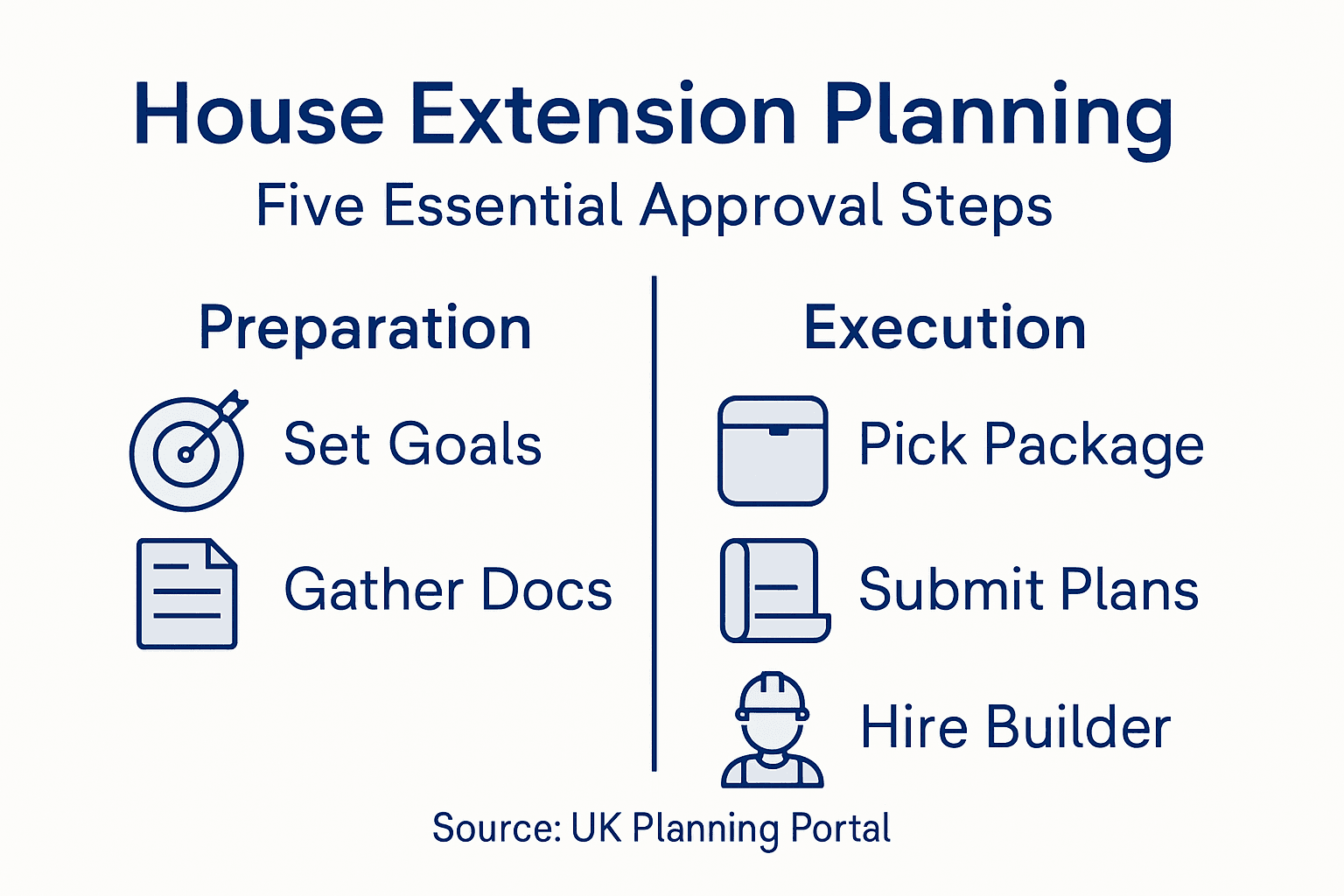
Planning a house extension in the UK can quickly feel complex with each local council setting its own rules about size and placement. Homeowners often discover early that defining clear extension goals and gathering the right documents for planning approval will save time, money, and future frustration. This straightforward guide breaks down each step to help you identify what your project truly needs, select affordable online architectural services, and connect with trusted local builders while minimising the stress of dealing with official paperwork.
Table of Contents
- Step 1: Define Your Extension Goals And Assess Feasibility
- Step 2: Gather Essential Property Details And Documentation
- Step 3: Select The Right Planning And Design Package Online
- Step 4: Submit Plans For Approval And Address Feedback
- Step 5: Connect With Vetted Builders To Start Construction
Quick Overview
| Main Insight | Explanation |
|---|---|
| 1. Define Clear Goals | Establish your extension objectives early to avoid delays and budget overruns. Consider space, functionality, and budget constraints. |
| 2. Gather Essential Documents | Compile all necessary property documentation to support your planning application, ensuring compliance with local regulations. |
| 3. Choose the Right Design Package | Select a planning and design package that meets your project needs and adheres to local regulations to ensure a smooth application process. |
| 4. Submit Plans Strategically | Prepare comprehensive plans for submission, focusing on clear communication and detailed documentation to anticipate feedback requirements. |
| 5. Vet Builders Thoroughly | Research and select reputable builders by verifying credentials and past projects to facilitate a successful construction experience. |
Step 1: Define your extension goals and assess feasibility
Starting your house extension journey requires crystal-clear goals and a pragmatic assessment of what’s genuinely possible within your property’s constraints. Understanding the scope and feasibility upfront saves significant time, money, and potential planning headaches.
To effectively define your extension goals, consider these critical factors:
- Space requirements: Precisely measure how much additional space you need
- Functional purpose: Determine whether you want extra living area, kitchen expansion, or bedroom addition
- Budget limitations: Establish a realistic financial framework for your project
Carefully evaluating your project against permitted development criteria is crucial. Each local council has specific rules about extension size, height, and positioning. Your plans must align with national and local planning regulations to avoid potential rejections.
Key feasibility considerations include:
- Property type and current layout
- Available outdoor space
- Neighbour boundary restrictions
- Potential impact on property value
Successful extension planning starts with thorough research and realistic expectations.
Smart Tip: Before investing in detailed drawings, schedule a preliminary consultation with your local planning department to understand specific requirements for your property type and location.
Step 2: Gather essential property details and documentation
Collecting comprehensive property documentation is a foundational step in your house extension planning journey. This crucial stage involves compiling all necessary paperwork that will support your planning application and demonstrate your project’s compliance with local regulations.
Key documents you’ll need to assemble include:
- Land registry documents: Proving exact property boundaries
- Existing property plans: Current floor layouts and site measurements
- Ownership certificates: Confirming legal property ownership
- Site photographs: Comprehensive visual documentation of current property state
When preparing your documentation, focus on building regulations approval requirements to ensure your application meets official standards. Local planning authorities will scrutinise every detail, so precision and completeness are paramount.
Documentation preparation involves several strategic steps:
- Request official land registry documents
- Locate or commission existing property floor plans
- Verify ownership certificates are current
- Take comprehensive site photographs from multiple angles
Thorough documentation preparation can significantly streamline your planning approval process.
Smart Tip: Create a dedicated digital and physical folder for all extension-related documents to maintain organisation and easy access throughout your project.

Step 3: Select the right planning and design package online
Selecting the appropriate planning and design package is a critical step in transforming your house extension vision into a reality. Your chosen package will determine the quality, comprehensiveness, and potential success of your planning application.
When evaluating online design packages, consider these essential criteria:
- Regulatory compliance: Ensure the package meets current building regulation standards
- Detailed documentation: Comprehensive drawings and technical specifications
- Local authority compatibility: Packages tailored to your specific regional requirements
- Professional expertise: Access to architectural professionals who understand extension regulations
Typical online design packages typically fall into three main categories:
Here is a comparison of the main types of house extension design packages for a clearer selection process:
| Package Type | Level of Detail Provided | Professional Involvement | Ideal Project Type |
|---|---|---|---|
| Basic Planning Package | Outline drawings only | Limited architect input | Small/simple extensions |
| Technical Design Package | Detailed technical specs | Moderate architect involvement | Moderate complexity |
| Comprehensive Package | Full documentation & specs | Extensive professional oversight | Complex/large extensions |
- Basic planning package
- Technical design package
- Full comprehensive package
Choosing the right design package can save you time, money, and potential future complications.
Careful package selection involves understanding your specific project needs, budget constraints, and the level of professional support required. Some packages offer more detailed drawings and technical specifications, while others provide minimal documentation suitable for simpler projects.
Smart Tip: Request sample documentation from different packages to compare their depth and detail before making your final selection.
Step 4: Submit plans for approval and address feedback
Submitting your extension plans marks a critical milestone in your home improvement journey. This stage requires careful preparation, strategic communication, and a proactive approach to navigating potential bureaucratic challenges with local authorities.
Key steps for successful plan submission include:
- Comprehensive documentation: Ensure all required forms and drawings are complete
- Precise measurements: Verify all technical specifications are accurate
- Clear communication: Prepare concise explanations of your proposed extension
- Neighbour considerations: Address potential impacts on surrounding properties
When submitting your plans, focus on building regulations approval requirements to minimise potential setbacks. Local planning authorities will meticulously review every aspect of your proposal, so attention to detail is paramount.
The submission process typically involves:
- Upload digital documentation to local planning portal
- Pay required application fees
- Await initial review and feedback
- Respond promptly to any additional information requests
Proactive communication and thorough documentation significantly increase your chances of smooth approval.
Prepare yourself mentally for potential feedback or requests for modification. Most initial submissions require some level of adjustment, so remain flexible and view this as an opportunity to refine your extension plans.
Smart Tip: Keep all communication with planning authorities professional, concise, and well-documented to create a positive impression and demonstrate your commitment to compliance.
Step 5: Connect with vetted builders to start construction
With your planning approval secured, the next crucial phase involves finding the right builders to transform your extension plans into reality. Selecting skilled, reliable professionals can make the difference between a smooth project and a potential nightmare.
When searching for builders, prioritise these key selection criteria:
- Professional credentials: Verify qualifications and trade memberships
- Previous extension experience: Review portfolios of similar projects
- Insurance and warranty coverage: Ensure comprehensive professional protection
- Local reputation: Check reviews and seek recommendations
Utilise resources like builder networks with established credentials to streamline your search and minimise risks. Reputable organisations can provide vetted professionals who understand local building regulations and construction standards.
The builder selection process typically involves:
Below is a summary of the builder vetting process stages and their key benefits:
| Stage | Main Activity | Project Benefit |
|---|---|---|
| Initial Research | Find reputable builder networks | Reduces risk & effort |
| Quote Requests | Gather multiple detailed estimates | Provides cost transparency |
| Reference Checking | Review builder credentials & work | Confirms quality & reliability |
| Contract Negotiation | Finalise terms and formal agreement | Secures project expectations |
- Request multiple detailed quotes
- Check references and past project portfolios
- Verify professional certifications
- Discuss project timeline and expectations
Investing time in finding the right builder will save you significant stress and potential expenses later.
Open and transparent communication remains critical throughout the selection and construction process. Establish clear expectations, regular check-ins, and documented agreements to ensure your project progresses smoothly.
Smart Tip: Always request a comprehensive written contract that details project scope, timeline, costs, and potential contingencies before commencing any construction work.
Simplify Your House Extension Journey with Expert Planning Support
Planning a house extension can feel overwhelming when facing complex regulations, detailed documentation, and the challenge of finding reliable builders. This article highlights essential steps such as defining extension goals, preparing accurate property details, selecting the right design package, submitting plans for approval, and connecting with vetted builders. If you want to eliminate guesswork and speed up your UK planning approval, you need a streamlined, expert-backed solution that covers every stage with clarity and confidence.
Take control of your project today by visiting Plan My Extension. Our fully remote architectural drawing services provide fixed-price design packages tailored exactly to your project needs—from planning permission drawings to technical designs meeting building control requirements. Plus, our trusted network of vetted local builders ensures your extension moves from plans to completion without unnecessary delays or uncertainties. Don’t wait and risk costly mistakes. Discover how easy and affordable your house extension can be at Plan My Extension and start your project on the right path now.
Frequently Asked Questions
What are the first steps to planning a house extension in the UK?
To start planning a house extension, define your goals by assessing space requirements, functional purposes, and budget limitations. Conduct thorough research to ensure your project aligns with permitted development criteria.
How can I determine the feasibility of my house extension?
To determine feasibility, evaluate key factors such as your property’s type and layout, available outdoor space, neighbour boundary restrictions, and potential impact on property value. Perform this assessment early to avoid potential planning complications later on.
What documents do I need to gather for my house extension application?
You will need to collect essential documents including land registry documents, existing property plans, ownership certificates, and site photographs. Organise these materials thoroughly to ensure your application meets local regulations and avoids delays.
How do I choose the right planning and design package for my extension?
Select a planning and design package by considering regulatory compliance, the level of detail provided, compatibility with local authority requirements, and access to professional expertise. Compare options to ensure the package aligns with the complexity of your project.
What steps should I take when submitting my plans for approval?
When submitting your plans, ensure all documentation is complete, verify specifications, prepare clear communication about the project, and consider neighbour impacts. Promptly respond to any feedback to increase your chances of a smooth approval.
How can I find reliable builders for my house extension?
Seek builders by verifying their professional credentials, reviewing their experience with extensions, ensuring they have insurance coverage, and checking local reputations. Gather multiple quotes and references to make an informed decision regarding the best fit for your project.