Skip to content

The Single-Storey Extension: The “Lifestyle” Choice
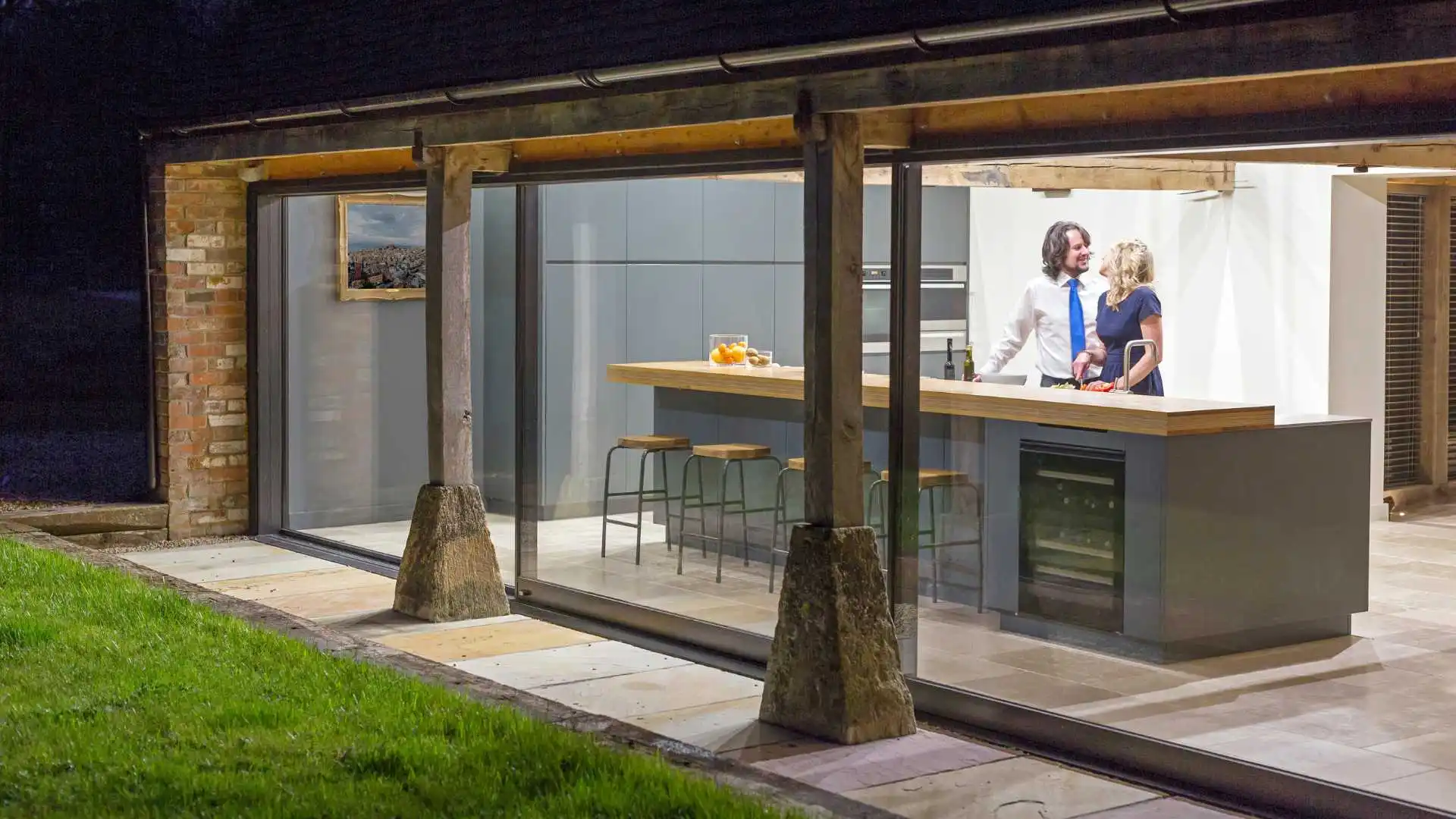
This is the most popular type of extension for a reason. A single-storey rear extension is usually about transforming how you live on the ground floor. It is the classic route to getting that open-plan kitchen, dining, and family area that connects your home to the garden.
Why choose it?
- Simpler Planning: Many single-storey projects fall under Permitted Development (PD). You can extend up to 4m (detached) or 3m (semi/terrace) without a full planning application. If you use the “Prior Approval” scheme, you can often go even deeper (up to 8m and 6m respectively).
- Less Disruption: Since the work is contained to the ground floor, it is often quicker to build (typically 2–6 months) and less intrusive to your daily life upstairs.
- Cost: It is cheaper overall than a two-storey build.
The Trade-off: You are using up your garden space to gain internal floor area. Also, while a huge kitchen adds “wow factor,” it does not add a bedroom—which is often the biggest driver of property value.
The Two-Storey Extension: The “Value” Choice
If your family is growing, a bigger kitchen might not be enough. A two-storey extension gives you that extra living space downstairs plus a new bedroom, bathroom, or office upstairs.
Why choose it?
- Smart Use of Space: You get double the floor area for the same “footprint” on your garden.
- Economies of Scale: This surprises many people. While a two-storey build costs more total, it is often cheaper per square metre. Why? Because you are paying for the foundations and the roof anyway—whether they cover one storey or two.
- Property Value: Adding a bedroom and an en-suite typically adds significantly more market value to a home than just expanding the ground floor.
The Trade-off:
- Planning is Harder: While you can build two storeys under Permitted Development, the rules are tight. You cannot extend further than 3m from the rear wall, and you must be at least 7m away from the rear boundary. If you want something bigger, you will certainly need full Planning Permission.
- Neighbour Issues: Going up means more potential to block your neighbour’s light or overlook their garden. This makes the design (and the Party Wall process) more complex.
Let Us Talk Money: The Cost Comparison
Disclaimer: Costs vary wildly by location (London vs. the North) and finish (standard vs. luxury).
- Single-Storey: Expect to pay roughly £1,650–£3,000 per m².
- Where the money goes: Bi-fold doors, skylights, and kitchen fittings often push this budget up.
- Two-Storey: The cost per m² can actually drop to around £1,800–£2,500.
- Where the money goes: Structural steel, scaffolding, and more complex plumbing/electrics for the new bathroom.
The Verdict: Which Should You Choose?
Choose a Single-Storey if:
- Your main goal is a lifestyle change (open plan living).
- You want a faster build with less red tape.
- You have a large garden and do not mind losing a slice of it.
Choose a Two-Storey if:
- You desperately need bedroom space (e.g., a growing family).
- You have a small garden and need to maximise internal space on a small footprint.
- You are looking for the best return on investment (ROI) regarding resale value.
Next Steps
Whichever route you choose, the most expensive mistake is assuming you know the rules without checking. Even Permitted Development has strict caveats regarding materials, eaves height, and window placement.
Thinking about extending? Before you commit to a builder, get your design and planning strategy sorted. Get a quote for your professional drawings today and let us ensure your new space adds value, not stress.