Skip to content

When you picture your dream extension, you are probably imagining the kitchen island, the sofa, or the bi-fold doors opening onto a sunny garden.
You probably are not dreaming about brick types or roof felt.
But the materials you choose for the “shell” of your extension are arguably more important than the paint on the walls inside. They dictate whether your new space blends seamlessly with your home or sticks out like a sore thumb. More importantly, they determine whether your extension still looks good in ten years—or becomes a maintenance money pit.
Here is how to choose materials that keep the council happy and your investment safe.
- The Legal Rule: “Similar Appearance”
If you are building under Permitted Development (PD) rights, you do not have total creative freedom. The rules state that the materials used in any exterior work must be of a “similar appearance” to those used in the construction of the existing house.
What this means for you:
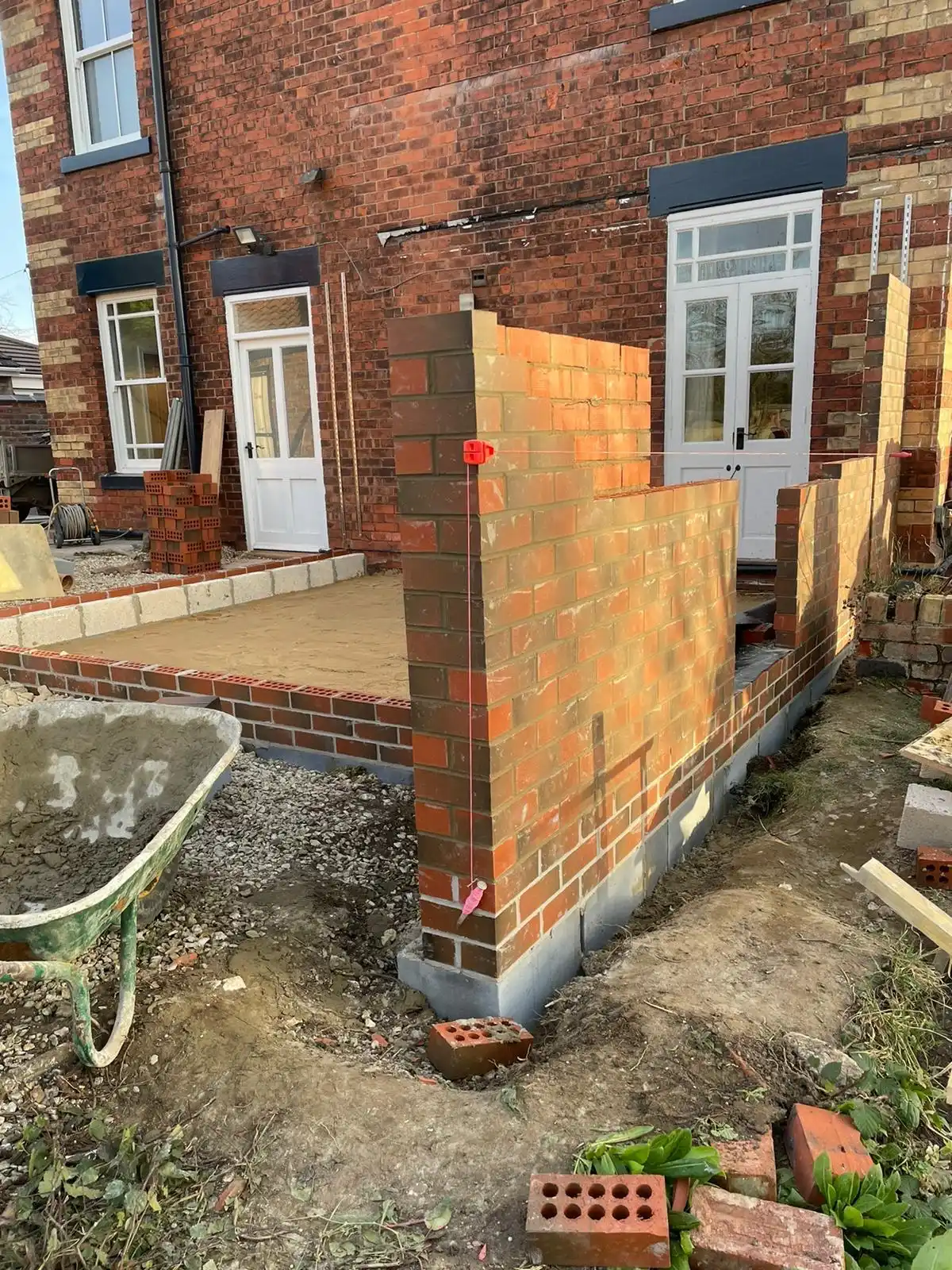
- Bricks: You need to match the colour and texture of your existing bricks. If you live in a Victorian terrace, a bright orange modern brick will get your project flagged (and possibly halted) by the council.
- Roofing: If your house has slate tiles, your extension’s pitched roof should usually have slate tiles.
- The Exception: These rules are stricter for side extensions and front porches. Modern rear extensions can sometimes get away with contrasting materials (like timber cladding or render) if done carefully, but it is a grey area. Always check with a designer first.
- The “Buy Cheap, Buy Twice” Warning
An extension is likely one of the biggest purchases of your life. Trying to save £500 on cheaper cladding or roof tiles is often a false economy.
Cheap materials age badly. Poor-quality render can stain and crack within a few years; cheap timber turns grey and rots if not obsessively maintained. As the saying goes: “If you think good design is expensive, you should look at the cost of bad design.”
- Smart Material Choices
Here is a quick guide to the most common options:
Bricks:
- New vs. Old: For older properties, “reclaimed” bricks (bricks salvaged from demolished old buildings) are the gold standard for an invisible join. If buying new, ask for a “brick match” service where suppliers find the closest modern equivalent.
- Mortar: Do not forget the cement between the bricks! If your house uses yellow mortar and the builder uses grey, it will not match.
Cladding:
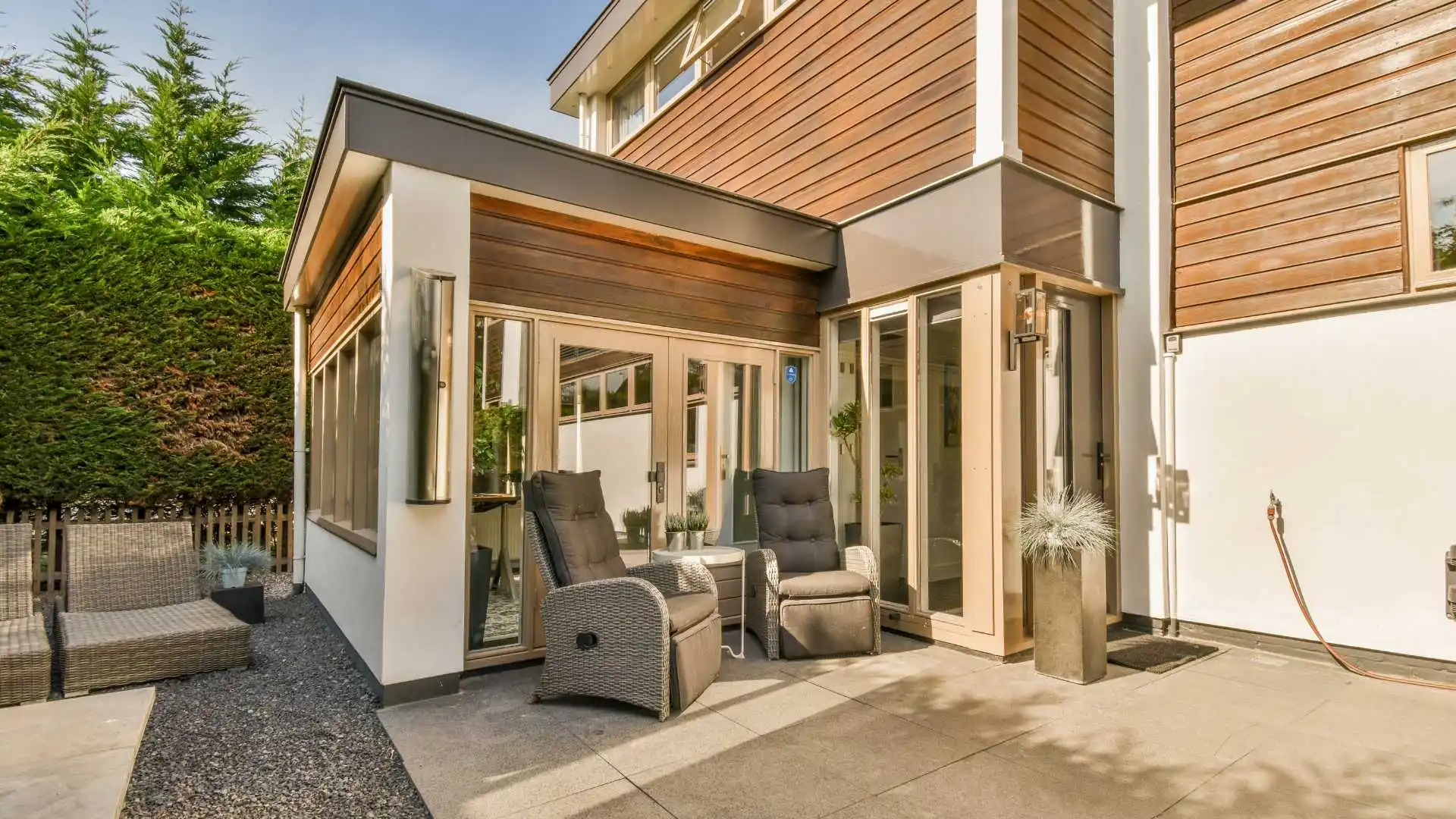
- Timber: deeply trendy and looks beautiful on modern box extensions. However, natural cedar requires oiling regularly to keep its colour.
- Composite: If you want the wood look without the paintbrush, consider composite cladding. It is durable, rot-proof, and colour-fast.
Glazing:
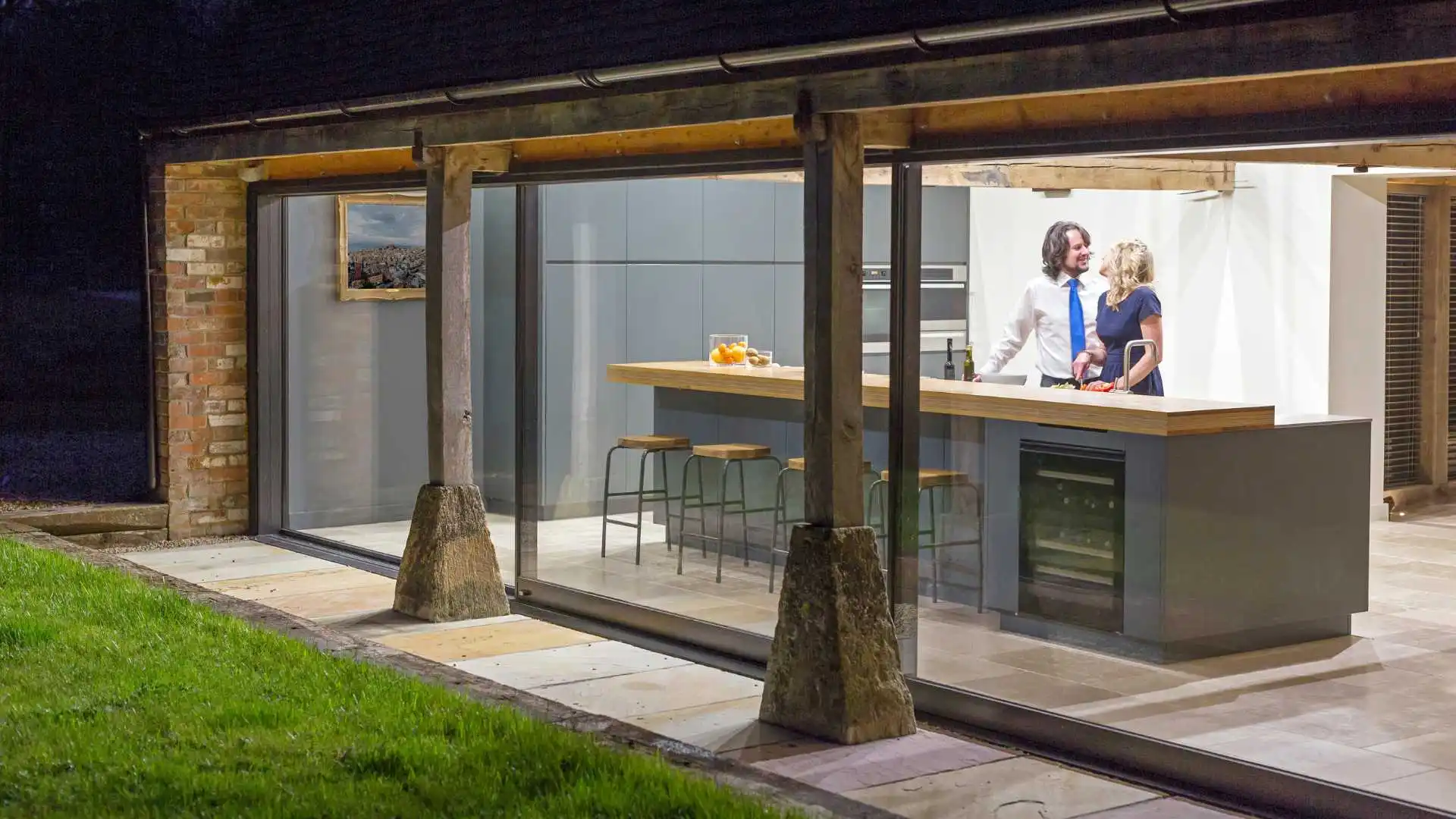
- Aluminium: The go-to for modern extensions. It allows for super-slim frames (maximising light) and lasts for decades.
- uPVC: Cheaper, but the frames are chunkier. Great for matching existing white windows, but less sleek for big sliding doors.
- The Boring (But Vital) Stuff: Maintenance
Be honest with yourself: How much DIY do you actually want to do?
- Render: A crisp white rendered wall looks stunning on day one. But in a damp climate, it can go green with algae or stain easily. It will need repainting every few years.
- Brick: Virtually zero maintenance. It handles rain and dirt without complaining.
- Flat Roofs: Old-school felt roofs had a bad reputation. Modern EPDM (rubber) or GRP (fibreglass) roofs are incredibly tough and can last 20–30 years with minimal fuss.
- Eco-Friendly = Wallet-Friendly
The building regulations for insulation are strict, but it pays to go beyond the minimum. Choosing high-performance glazing and extra insulation in your roof and floor might cost a little more upfront, but it will lower your heating bills permanently. A “glass box” extension might look cool in a magazine, but without the right glass, it will be a freezer in winter and a greenhouse in summer.
Conclusion
Choosing materials is a balancing act between what the council allows, what your budget permits, and what you are willing to maintain.
Do not let the choice overwhelm you. At Plan My Extension, we specify the right materials in our drawings to ensure your build is compliant, durable, and beautiful.
Ready to see what is possible? Get a quote for your extension design and let us create a space that looks as good on the outside as it feels on the inside.